Clearing Blockages Before They Flood Your Property
Jet sewer lines in under services for slow drains, recurring backups, and blocked field lines
Hydro jetting uses high-pressure water streams to clear sewer lines and field lines when tree roots, grease buildup, or settled solids restrict flow. S & S Sewer Systems handles jetting and field line repair for properties in under services where conventional snaking leaves blockages partially intact. You'll notice drains that empty completely, toilets that flush without hesitation, and no sewage odor lingering in the yard.
Jetting works by directing pressurized water through the line at angles that scour pipe walls and push debris toward the outlet, removing buildup that cable augers can't reach. Field lines, which distribute effluent underground, often fail when solids accumulate in the distribution pipes or roots penetrate perforations, and jetting restores flow by breaking up obstructions and flushing sediment from the gravel bed.
Schedule a line inspection to determine whether jetting alone will restore function or if field line repair is required.
How Pressurized Water Restores Line Capacity
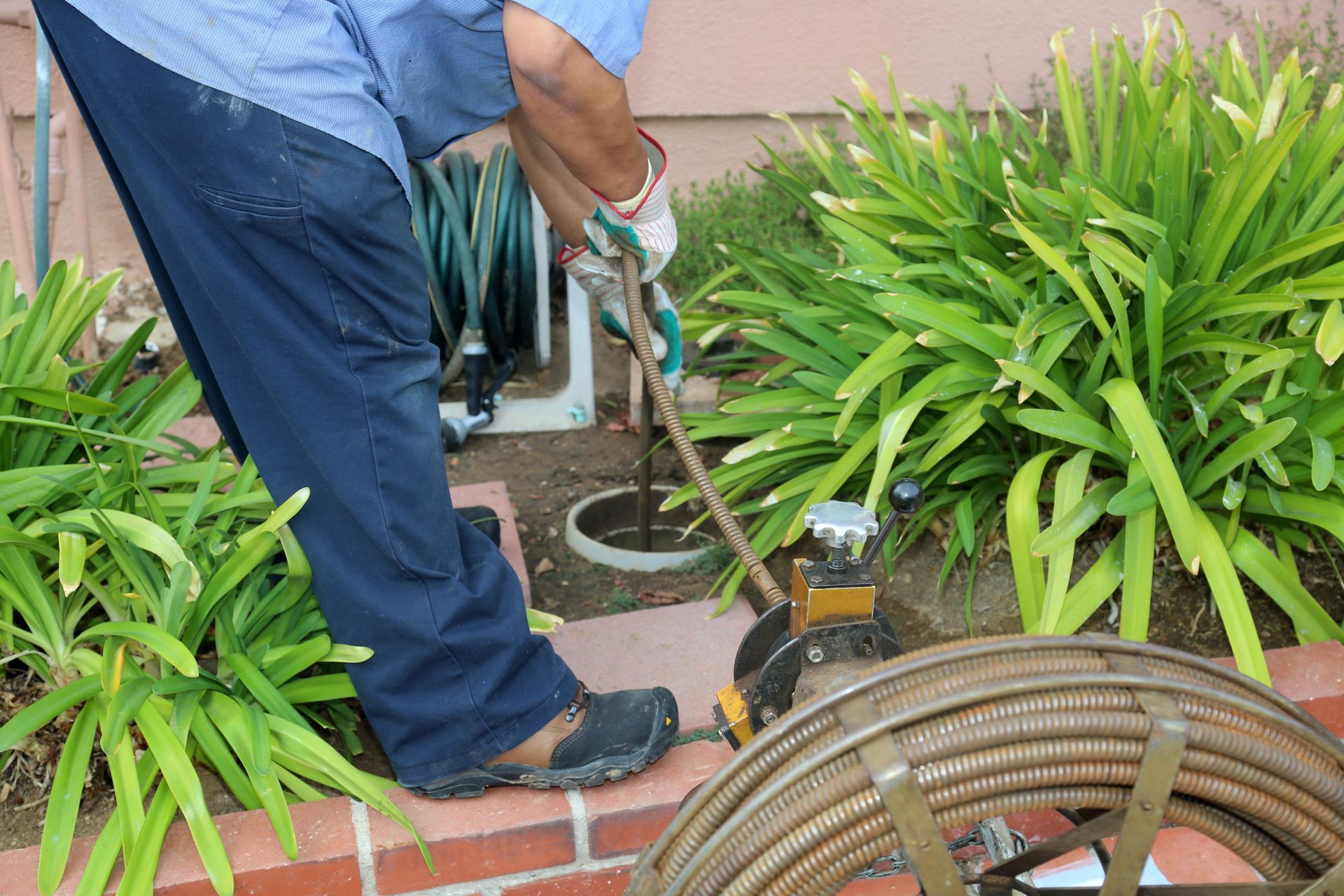
The jetting process begins with a camera inspection to locate blockages and assess pipe condition, then a specialized nozzle is inserted that propels itself forward while spraying water backward at pressures typically between 3,000 and 4,000 PSI. This combination cuts through grease, pulverizes root masses, and flushes accumulated grit that narrows the pipe diameter over time.
After jetting is complete, you'll see drains that run at full speed without gurgling, standing water that disappears from the yard, and no sewage backing up into lower fixtures during heavy water use. Field lines that have been jetted and repaired allow effluent to percolate evenly through the soil instead of surfacing or pooling in one area.
Field line repair may involve replacing collapsed sections, redirecting flow away from compacted zones, or adding distribution laterals where soil absorption has failed. The approach depends on whether the pipe structure is intact or if tree intrusion and settling have caused permanent damage that jetting cannot reverse.
What Property Owners Usually Ask
Homeowners dealing with sewer and field line problems often have similar concerns about the process and what to expect during service.
What does hydro jetting remove that snaking does not?
Jetting scours the entire pipe circumference and removes scale, grease layers, and root fibers clinging to the walls, while cable snakes only bore a hole through the center of a blockage, leaving residue that reforms quickly.
How do I know if my field lines need repair or just jetting?
If effluent surfaces in the yard, if the distribution area stays saturated even in dry weather, or if the camera inspection shows crushed or separated pipe sections, repair is necessary because jetting alone cannot restore structural integrity.
When should jetting be scheduled for preventive maintenance?
Properties with mature trees near sewer lines or homes that dispose of grease through drains benefit from jetting every two to three years before roots and buildup create full blockages.
What happens during a field line repair?
Damaged sections are excavated, broken pipes are replaced, and distribution layout is adjusted if soil compaction or root intrusion has concentrated flow in one area, then the system is tested to confirm even percolation.
How long does jetting take for a typical residential line?
Most residential sewer lines can be jetted in one to two hours depending on line length and blockage severity, though field line repairs require additional time for excavation and replacement of underground components.
S & S Sewer Systems provides camera inspection, jetting, and field line repair for properties where drainage issues persist despite basic clearing attempts. Request an evaluation to identify the source of blockages and determine the most effective restoration approach.